What Hiking Has Taught Me About Getting Older

I'm 49, and I don't feel old.
But somewhere around 42, I started noticing things I hadn't really thought about before. My joints didn't always feel the same, and recovery started taking a little longer. A hard workout or a long hike that I could bounce back from pretty easily when I was younger sometimes required a little more planning and a little more recovery.
I don't think that's necessarily a bad thing. It's just part of getting older. What has changed is how I approach it.
I don't try to pretend my body is the same as it was at 25. Instead, I pay more attention to how I train, how I recover, and what I need to do to keep doing the things I love.
And one of those things is hiking.

Most of the People I Hike With Are Over 50
A lot of the people I hike with are actually older than me. They're in their 50s, and they are some of the toughest people I know.
I don't notice a huge difference between hiking with someone in their 50s and hiking with someone in their 30s. Most of the people I hike with also train with me, so they're fit and experienced. They're capable of putting in some serious miles.
Sometimes the pace is slower, especially when someone who doesn't train consistently or isn't as intentional about their nutrition and recovery joins the group. But that's not really an age thing. It's usually a training or lifestyle thing.
What impresses me most isn't necessarily how fast these people are. It's their resilience. They're tough individuals. They can keep pushing when things get uncomfortable, and they don't seem nearly as concerned with proving something as they are with finishing the hike.
I see people in their 60s and 70s out on the trail all the time doing long, difficult hikes. Honestly, they're an inspiration to me. I look at them and think, That's what I want to be doing.
I want to be that person who is still capable of taking on a hard hike decades from now. And I hope I'm an inspiration to the people younger than me, too.
My Sister Changed the Way I Look at Aging
One of the biggest things that changed my perspective on what is possible as we get older was watching my older sister.
She didn't work out. She didn't hike—at least not serious hikes. She wasn't someone you would have looked at and thought, She's going to hike the Grand Canyon someday.
Then she started training with me.
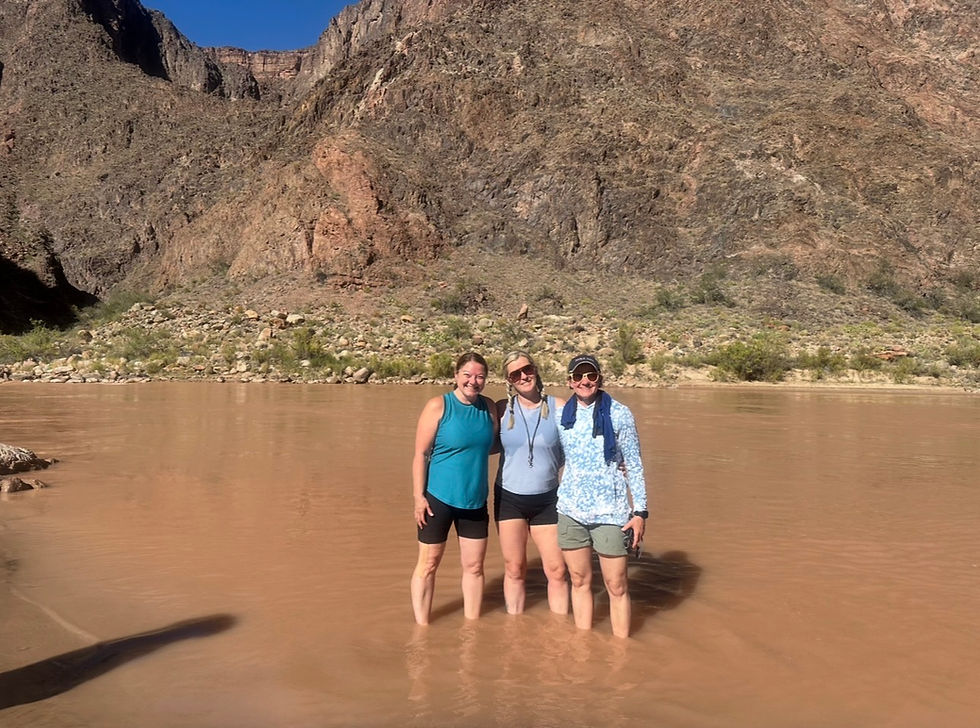
About two years later, at 52 years old, she hiked the Grand Canyon.
And crushed it.
That experience really stuck with me because it was proof that you don't have to spend your entire life being an athlete to become capable of doing something difficult. You can start where you are, put in the work, and build yourself into someone who can do things you never thought you could.
That lesson applies far beyond hiking.
I've learned that saying, "I've never done that," is very different from saying, "I'm too old to do that." The first one is a starting point. The second one is a limitation we put on ourselves.
Getting Older Has Made Me Train Smarter
I don't necessarily feel stronger now than I did when I was younger. What I do feel is smarter.
I train with more intention because I understand my body better. I'm more aware of mobility, recovery, nutrition, sleep, and the importance of preparing my body for what I'm asking it to do.
Strength training has become a huge part of that.
And I'm not talking about strength training just to build bigger muscles or see how much weight I can put on a barbell. I want my muscles, tendons, ligaments, and joints to be prepared for the demands of hiking. If I'm going to spend hours climbing, descending, carrying a pack, stepping over rocks, and navigating uneven terrain, I want my body to have some experience handling those demands before I get to the trail.
That's also why I think recovery becomes more important as we get older. Preparation doesn't stop when the hike begins, and it doesn't stop when the hike ends.
One of my biggest tips after a hard hike is simple: keep moving.
Hydrate, obviously, but don't spend the entire next day sitting on the couch because you're sore. Take an easy walk. Ride a bike. Move your body. You don't need another hard workout, but some easy movement can help keep you from getting incredibly stiff.
Nutrition and supplements can also play a role in supporting recovery, but if I had to put one thing at the top of the list, it's sleep. Good sleep is critical for having good training days and recovering from the work you're putting your body through.
My Definition of Fitness Has Changed
When I was younger, I cared a lot more about performance.
How much can I lift? How fast can I run? Can I keep up with someone else?
I still enjoy those things, but they're not what motivates me anymore.
At 49, I don't worry nearly as much about whether I'm outlifting someone in the gym or running faster than someone else. I worry about whether I'll still be able to lift at all. Whether I'll still be able to run. Whether I'll still be able to hike.
That's a pretty significant shift in mindset.
I'm less interested in proving what my body can do today and more interested in making sure my body is capable of doing the things I want it to do for as long as possible.
That means the quality of my training matters more than my ego. I want my workouts to have a purpose. I want them to make me better at the things I actually care about doing outside the gym.
For me, that's hiking.
The Fear of Losing the Things You Love
One of the things I don't think we talk about enough when it comes to getting older is the fear of eventually becoming incapable of doing the things we love.
That's a real fear for me.
I don't want to wait until I'm 60 or 70 to realize I should have started taking care of my body years earlier. I don't want to look back and wish I had done more when I had the opportunity.
It's easy to tell ourselves we'll do something later.
When I have more time.
When I have more money.
When work slows down.
When the kids are older.
When things aren't so busy.
There's always going to be something.
Getting older has taught me that life is too short to wait.
That's one of the reasons I'm always training. At the gym, on the trail, or wherever I can fit it in. I have a day job and I run a gym, so I can't get out on the trail every day. But I can train for the trail in the gym.
And so far, that approach has paid off very well. I feel confident and capable when I hike because I know I've prepared for it.

I Want to Always Be Ready
One of my favorite thoughts is this:
What if someone called me today and said, "Hey, I won the lottery. Let's go hike the Appalachian Trail."
I'd want my answer to be, "Let's go."
Obviously, there would be some logistics to figure out. I'd have to pack, rearrange my schedule, and make the trip happen. But physically, I want to be ready.
I want to section hike the Appalachian Trail someday. I don't know exactly when that will happen, but I'm not going to wait until I have a date on the calendar to start preparing.
That's really the philosophy behind how I train now.
I'm not training for one particular hike. I'm training for the possibility of all the hikes I haven't done yet.
I'm training so that my body isn't the reason I have to say no to an opportunity.
You're Never Too Old to Start
I think we sometimes make aging much more limiting than it has to be.
Does your body change as you get older? Absolutely. Do you have to pay more attention to recovery and how you train? In my experience, yes.
But "I'm too old" doesn't have to be the answer.
My sister is a great example of that. The people I hike with are examples of that. And every time I see someone older than me tackling a difficult trail, I'm reminded that age doesn't automatically determine what you're capable of.
You don't have to start as a hiker. You don't have to be fast. You don't have to already be in great shape.
You can start where you are and build from there.
The goal isn't necessarily to be the fastest person on the trail or the strongest person in the gym. The goal is to keep your body capable of doing the things that make your life worth living.
For me, that's hiking.
I don't train because I want to look a certain way. I train because I want to be able to do the things I love.
And when I'm 70, I want to still be the person who inspires someone else to dream big.
Maybe I'll be hiking with someone who is 50 and just getting started. Maybe I'll be the oldest person in the group. Maybe I'll be somewhere on the Appalachian Trail wondering why I thought that particular section was a good idea.
But I want to be there.
Still moving. Still exploring. Still dreaming about the next trail.
Because getting older doesn't have to mean making your world smaller.
It can mean making sure you're strong enough to keep exploring it.
Next up- Colorado 14er- Pikes Peak--- Happy 5-0 in 2027

Comments